
Fast-Curing Systems for Minimal Downtime
Polyaspartic Floor Coatings in Andover for garages and commercial spaces requiring quick turnaround
Standard epoxy systems require multiple days of curing before vehicles or equipment can return, which creates scheduling problems for businesses and homeowners who cannot vacate spaces for extended periods. Polyaspartic coatings cure rapidly enough that floors become usable within twenty-four hours while delivering durability comparable to slower-curing systems. Next Level Epoxy applies polyaspartic formulations in Andover for projects where downtime matters as much as long-term performance, particularly in commercial garages and retail spaces that cannot close for multi-day installations.
These coatings use aliphatic chemistry that resists UV yellowing, so floors near windows or overhead doors maintain color clarity instead of developing the amber tint that standard epoxy shows after sun exposure. The fast cure comes from reactive hardeners that crosslink at lower temperatures than epoxy, and the flexibility built into the polymer chain prevents cracking when concrete expands or contracts. Decorative flake options broadcast into the wet coating provide the same textured appearance as traditional systems.
Schedule a property evaluation to confirm your concrete is suitable for rapid-cure systems and discuss timeline requirements.
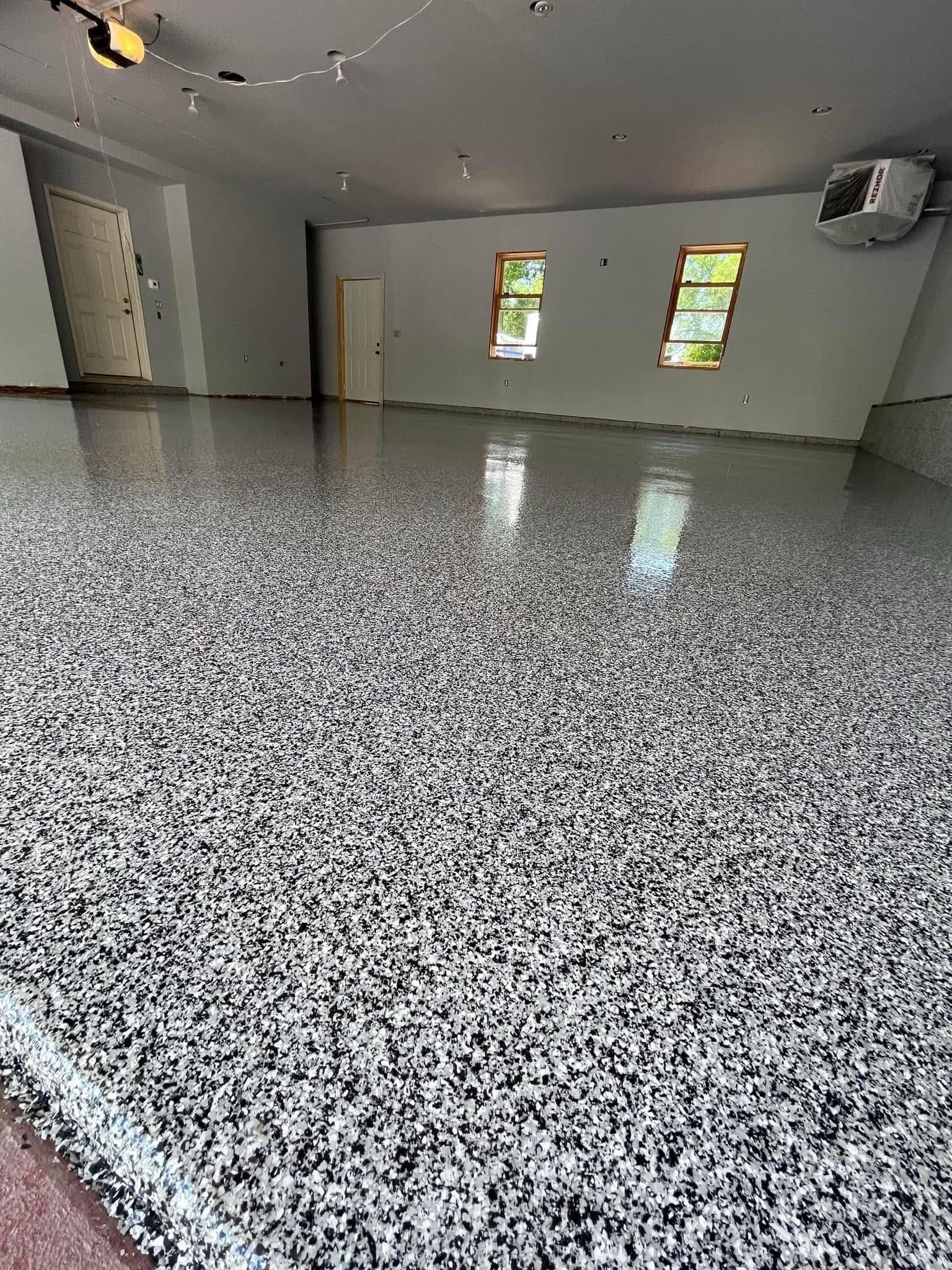
The Difference Between Polyaspartic and Standard Epoxy
Polyaspartic application follows similar preparation steps—diamond grinding, crack filling, and priming—but the coating window is shorter because the material begins to gel within thirty minutes of mixing. Installers work in smaller batches and move quickly to spread and back-roll the coating before it tacks up. The rapid cure means decorative flakes must be broadcast immediately, and any texture additives get incorporated during mixing rather than added later.
Once cured, the surface resists the same chemicals and impacts as traditional epoxy but does not yellow when exposed to sunlight streaming through garage doors or storefront windows. You can park vehicles on the floor the next day without worrying about hot tire pickup, and the finish maintains its gloss longer because UV exposure does not degrade the polymer. The coating handles temperature swings without becoming brittle in winter cold or softening during summer heat.
The fast cure requires precise timing and cannot be extended by adjusting temperature, so installers must plan the work in sections that can be completed within the pot life. Polyaspartic costs more per gallon than standard epoxy, which makes it cost-effective for projects where downtime carries a higher expense than material cost. The system works best on sound concrete without excessive moisture transmission, since there is less time to address substrate issues during installation.
Questions Before Starting Your Project
Property owners evaluating polyaspartic systems usually want clarity on how fast-cure coatings perform compared to traditional options.
What allows polyaspartic coatings to cure faster than epoxy?
The aliphatic isocyanate hardener reacts more aggressively with the resin, creating crosslinks within minutes instead of hours, which shortens the time before the coating reaches functional hardness.
How does UV resistance prevent yellowing?
Aliphatic polymers do not contain the aromatic rings that absorb UV light and trigger discoloration, so the coating maintains its original color even in direct sun exposure.
When is polyaspartic worth the additional cost?
Projects where each day of closure costs more than the material premium—like retail floors or residential garages during moving timelines—benefit most from the shortened installation window.
Why can't installers slow the cure in cold weather?
The chemical reaction proceeds based on hardener chemistry rather than temperature, so unlike epoxy that can be warmed to speed cure or cooled to extend working time, polyaspartic reacts on a fixed timeline.
How do Andover temperature swings affect polyaspartic floors?
The coating remains flexible across a wider temperature range than rigid epoxy, so it expands and contracts with the concrete during seasonal changes without micro-cracking.
Next Level Epoxy installs polyaspartic floor coatings for clients who need durable finishes without extended downtime. Contact us to review your project timeline and determine whether fast-cure systems fit your schedule and budget.